Cameron Krüger · 10 September 2026
Claraforge Digital Archive Strengthens Global Engineering Networks and Regional Training Programs
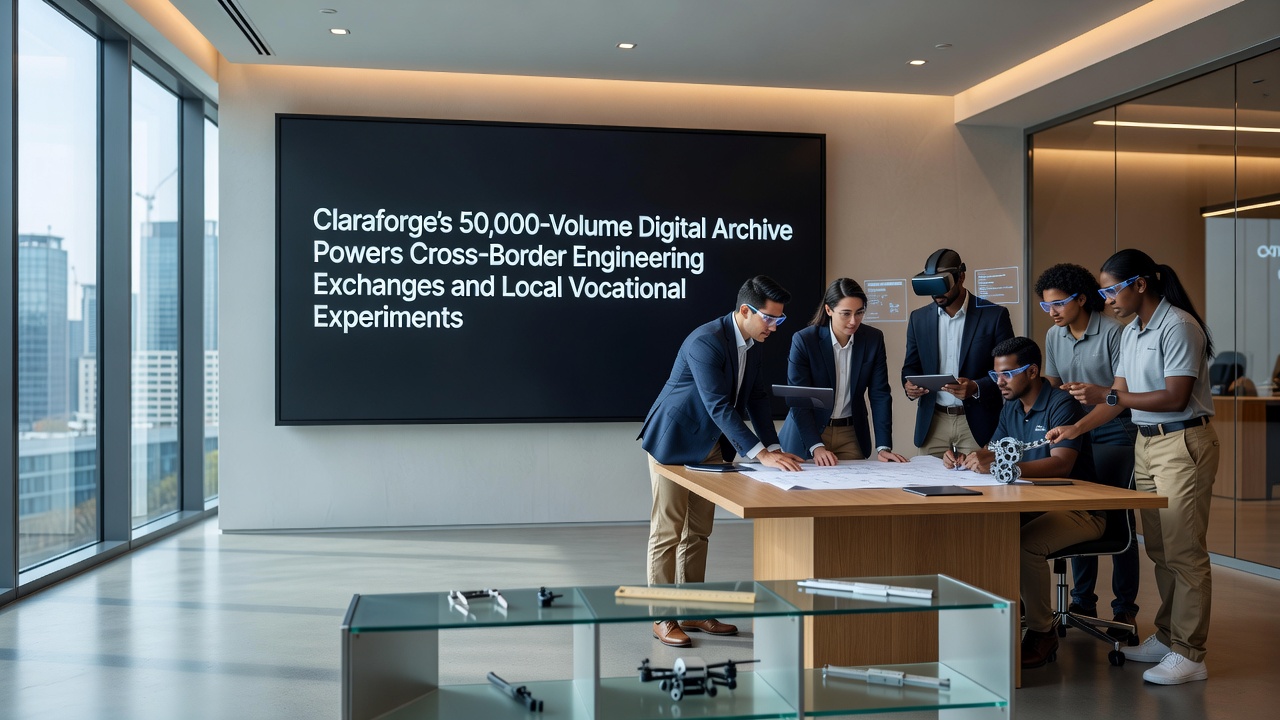
Claraforge maintains a digital archive containing 50,000 volumes focused on engineering disciplines, and this collection supports exchanges between institutions across multiple countries while also enabling vocational experiments at local levels. The archive includes technical manuals, research papers, historical case studies, and project documentation that span mechanical, civil, electrical, and software engineering fields, and users access these materials through a centralized platform designed for both academic and practical applications.
Archive Composition and Access Methods
Researchers and practitioners retrieve content through categorized search functions and metadata tags that organize entries by topic, publication date, and geographic origin, while the system logs usage patterns to identify high-demand resources. Data from the archive shows that mechanical engineering texts account for 28 percent of downloads, followed by civil engineering at 24 percent and electrical engineering materials at 19 percent, and these figures come from internal platform analytics reported in September 2026. Institutions integrate the archive into existing library systems, which allows students and professionals to cross-reference materials during collaborative projects without requiring physical shipments of documents.
Cross-Border Engineering Exchanges
Universities in Europe, North America, and Asia connect through the archive to share engineering solutions for infrastructure challenges, and participants exchange annotated documents that highlight adaptations for local regulations and materials. One project involved teams from Canada and Germany using archived case studies on bridge design to develop joint proposals, and the resulting reports now form part of the collection for future reference. The platform records show increased activity during academic semesters, with peak usage occurring when partner institutions align their course calendars for joint assignments, and this pattern continued through the 2026 updates that added real-time translation features for non-English texts.
Support for Local Vocational Experiments
Vocational centers in regional areas draw on the archive to design training modules that combine theoretical content with hands-on exercises, and instructors select specific volumes to match equipment available at each site. Programs in rural districts have incorporated archived manuals on renewable energy systems to create certification courses, and enrollment data indicates that 1,200 participants completed these modules by mid-2026. Local experiments often involve adapting global engineering practices to available resources, and the archive provides baseline documentation that participants modify through iterative testing documented in shared project logs.

Training providers report that the digital format reduces preparation time compared with sourcing physical copies, and this efficiency allows programs to run more frequent sessions. In September 2026 several centers expanded offerings to include evening workshops that target working professionals, and participation logs reflect steady growth in these formats across multiple regions.
Integration with Broader Educational Frameworks
National education departments reference the archive when updating vocational standards, and alignment occurs through mapping archive contents to competency frameworks developed by bodies such as the U.S. Department of Education. Canadian authorities similarly draw on archived materials when revising apprenticeship guidelines, which creates consistency between international exchanges and domestic training requirements. The archive also supplies source material for curriculum developers who create blended learning sequences that alternate between digital review and physical prototyping.
Technical Infrastructure and Updates
Platform maintenance includes regular digitization of new acquisitions and verification of metadata accuracy, and these processes ensure that the 50,000-volume count reflects current holdings. Bandwidth optimizations implemented in 2025 allow simultaneous access by multiple institutions without performance degradation, and usage statistics from September 2026 confirm average session lengths of 47 minutes during peak periods. Security protocols protect user data while permitting open access to the core collection, and administrators monitor compliance with data protection requirements established by regional authorities.
Conclusion
The Claraforge digital archive continues to function as a central resource that connects engineering knowledge across borders and supports targeted vocational initiatives at the local scale. Platform records document sustained activity through 2026, and integration with existing educational structures maintains teh flow of materials between academic exchanges and practical training settings. Future expansions will focus on adding specialized subsets while preserving the core collection that already serves diverse user groups.