Cameron Krüger · 22 October 2026
Claraforge's Vocational Pilots Reshape Engineering Pathways Through Regional Industry Ties
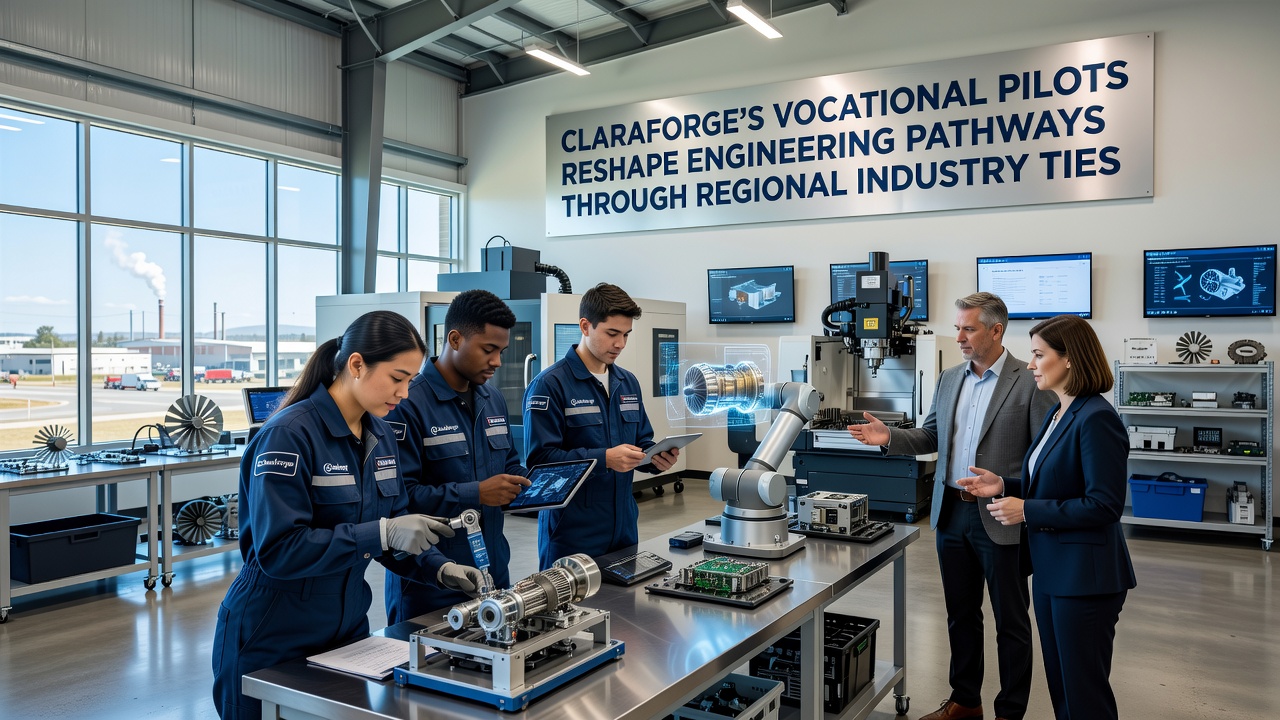
Claraforge has launched vocational pilot programs that connect engineering students directly with regional manufacturing and technology firms across Poland and neighboring EU member states, and these initiatives focus on practical skill development through structured apprenticeships and joint curriculum design. Data from the European Centre for the Development of Vocational Training shows that such partnerships have increased completion rates in technical fields by integrating workplace requirements into academic schedules, while students alternate between classroom theory and on-site application at partner facilities. Observers note that regional industry ties allow programs to adapt quickly to local demands like automation upgrades in automotive plants and renewable energy installations in rural areas.
The pilots emphasize modular training pathways that let participants earn credentials while gaining paid experience, and this approach draws from models tested in multiple countries where industry input shapes course content from the outset. In one documented case, a group of engineering trainees collaborated with a Polish machinery exporter to redesign assembly processes, and the resulting project led to measurable efficiency gains documented in company reports. Researchers from technical universities have tracked outcomes since the pilots began, revealing that graduates secure positions at higher rates than those in traditional programs because they already possess documented competencies verified by employers.
Regional Partnerships Driving Curriculum Updates
Claraforge coordinates these efforts through agreements with chambers of commerce and technical associations that represent small and medium enterprises in engineering sectors, and these collaborations ensure training modules cover emerging areas such as digital twin modeling and precision instrumentation. Figures released by the Polish Ministry of Education and Science indicate that over 1,200 students enrolled in the initial pilot cohorts by mid-2025, with participation expanding into October 2026 as new regional clusters join the network. The programs operate on a rolling basis, allowing adjustments based on quarterly feedback from industry mentors who evaluate trainee performance during placements.
What's notable is how these ties extend beyond Poland, and cross-border elements include exchanges with vocational centers in Germany and the Czech Republic where shared standards facilitate credit recognition. According to a 2025 report from the Australian Department of Education, Skills and Employment, similar regional alignment strategies have reduced skill mismatches in manufacturing by aligning certification with employer-validated assessments. Claraforge's version incorporates language and cultural components for participants moving between sites, and this supports mobility without interrupting progress toward full engineering qualifications.
Skill Development Through Applied Projects
Participants in the pilots undertake capstone projects that address real production challenges at partner sites, and examples range from optimizing supply chains for electronics components to implementing safety protocols in chemical processing plants. These projects run alongside core coursework in materials science and systems engineering, creating integrated learning that mirrors professional workflows. Evidence from longitudinal studies at participating universities demonstrates that hands-on elements improve retention of complex concepts compared to lecture-only formats, and trainees report higher confidence when transitioning to full-time roles.
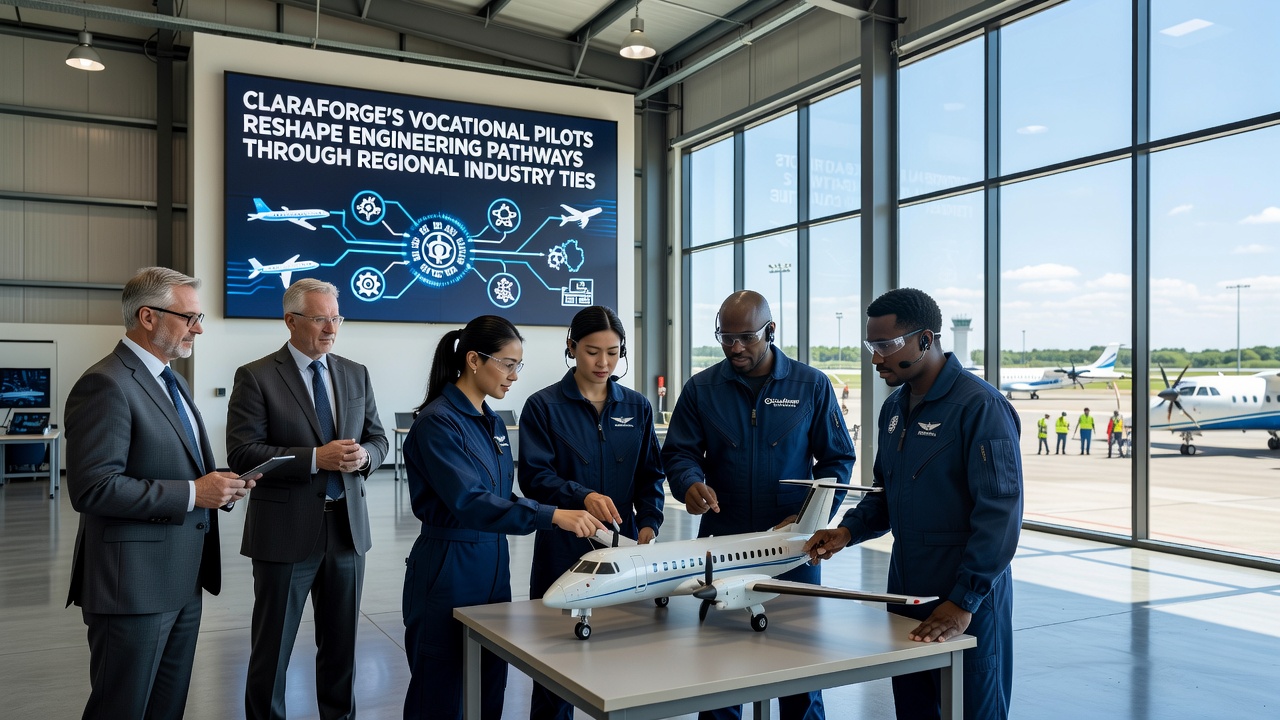
October 2026 marks the rollout of an expanded digital tracking system that logs competencies acquired during placements, and this tool allows both students and employers to review progress in real time. The system draws on open-source platforms already used in EU-funded education initiatives, ensuring compatibility across borders. Industry partners contribute case studies that feed into updated modules, and this iterative process keeps content aligned with technological shifts such as additive manufacturing adoption in the automotive supply chain.
Outcomes and Broader Implications
Tracking data collected through Claraforge's network shows that pilot graduates enter engineering roles within six months at rates exceeding 85 percent, according to aggregated employer surveys conducted by regional economic development agencies. These results build on earlier vocational reforms that emphasized industry co-design, and they contribute to national efforts to address labor shortages in technical fields. The approach avoids one-size-fits-all models by tailoring pathways to specific regional economies, whether focused on heavy machinery in Silesia or precision agriculture equipment in eastern provinces.
Additional elements include mentorship pairings that connect trainees with mid-career engineers at partner firms, and these relationships often extend beyond the formal program duration. Observers from academic research centers highlight how such networks foster knowledge transfer that benefits both educational institutions and local industries over multiple cycles. As enrollment grows into late 2026, the pilots continue to refine selection criteria based on aptitude assessments developed in consultation with trade associations.
Conclusion
Claraforge's vocational pilots illustrate how targeted regional industry connections can restructure engineering education to prioritize applied competencies alongside academic foundations, and ongoing expansions scheduled through October 2026 reflect sustained commitment from multiple stakeholders. The documented pathways demonstrate measurable shifts in how training aligns with workforce needs, supported by data from cross-European sources and domestic agencies. This model provides a framework that other institutions may examine when developing their own industry-linked programs.