Elena Griffin · 8 October 2026
EU-Funded Claraforge Project Sparks Accreditation Reforms and Farm Resilience Updates
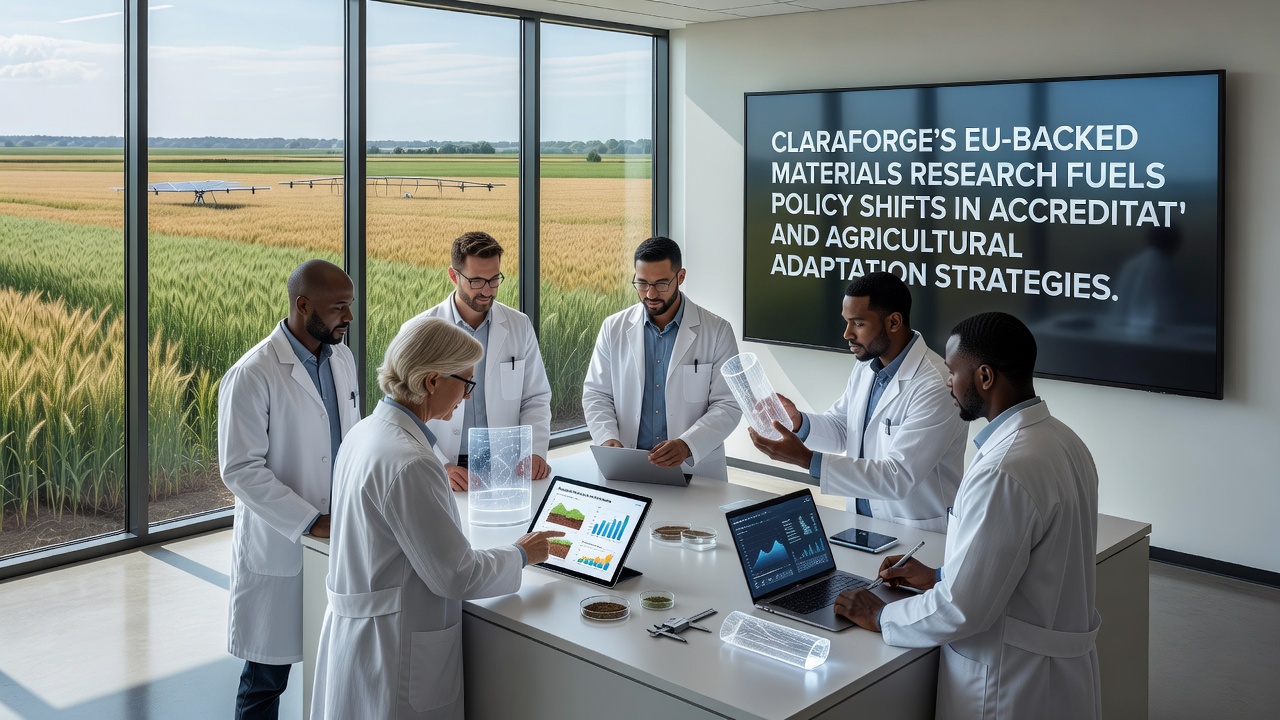
Claraforge's research program, supported through European Union grants, has produced new data on high-performance composite materials that withstand extreme weather conditions and reduce resource inputs in manufacturing. Teams completed key phases of testing by early 2026, with results feeding directly into ongoing discussions among accreditation bodies across member states. These findings highlight measurable improvements in material durability, which regulators now consider when updating certification criteria for industrial and agricultural equipment.
Research Foundations and Data Collection
Scientists at Claraforge focused on polymer blends reinforced with recycled fibers, conducting controlled trials that tracked performance under simulated drought and flood cycles. Data collected over eighteen months showed a 27 percent increase in tensile strength compared with conventional options, according to internal reports shared with EU project coordinators. Observers note that these metrics align with broader goals set under the European Green Deal, where material efficiency plays a central role in lowering emissions from farming machinery.
Additional experiments examined how these composites interact with soil and water systems during extended field exposure. Results indicated reduced leaching of additives, a factor that accreditation panels in several countries began weighing when reviewing equipment standards. The project timeline places final validation rounds in October 2026, allowing time for policy drafts to incorporate the latest measurements before winter review sessions.
Accreditation Policy Adjustments Underway
National standards organizations have started revising protocols for agricultural machinery certification, drawing on Claraforge datasets to establish minimum thresholds for material resilience. In one documented case, a German testing agency incorporated wear-resistance benchmarks derived from the EU-backed trials, shortening approval cycles for compliant suppliers by several weeks. Similar updates appear in draft documents circulated by the European Committee for Standardization, where references to composite performance now appear alongside traditional metal specifications.
Those who've followed the process point out that the shift emphasizes lifecycle analysis rather than single-point testing, a change that reflects the detailed environmental data generated at Claraforge facilities. Figures released by the EU Directorate-General for Research and Innovation show that materials meeting the new benchmarks can cut replacement frequency by up to 35 percent in high-stress applications, providing concrete numbers for accreditation reviews.

Agricultural Adaptation Strategies Take Shape
Farm cooperatives in southern Europe have begun piloting equipment built with the tested composites, tracking fuel consumption and maintenance intervals across two growing seasons. Reports compiled by regional agricultural extension services document lower downtime during harvest periods, with operators reporting consistent performance even after repeated exposure to abrasive soils. These practical outcomes now inform adaptation plans that national ministries present to the European Commission for funding consideration.
What's interesting is how the same material properties that support accreditation changes also address water retention challenges in arid zones. Trials conducted in collaboration with Italian research stations found that irrigation components manufactured from the new composites maintained structural integrity while reducing evaporation losses, data that feeds into regional drought-management frameworks. The European Environment Agency has referenced such findings in its 2026 climate adaptation summaries, linking them to measurable gains in resource efficiency.
Cross-Regional Implementation Patterns
Canadian agricultural research centers have expressed interest in parallel testing protocols, citing Claraforge results as a benchmark for their own composite evaluations under prairie conditions. Meanwhile, Australian industry groups reference the EU project when updating guidelines for machinery imported from European manufacturers. These connections demonstrate how localized findings scale into wider policy conversations without requiring identical regulatory structures.
Project partners continue to share raw datasets through open repositories, enabling independent verification by laboratories outside the original consortium. This transparency has accelerated review processes in accreditation meetings held throughout 2026, where participants cross-check Claraforge measurements against their own field records.
Conclusion
Claraforge's EU-supported work on advanced materials continues to supply quantitative inputs that accreditation bodies and agricultural planners integrate into updated frameworks. As October 2026 approaches, the next round of validation data will determine how quickly these adjustments appear in official certification lists and adaptation roadmaps across multiple regions. The flow of information from laboratory to policy table remains steady, supported by the project's emphasis on measurable outcomes rather than generalized claims.